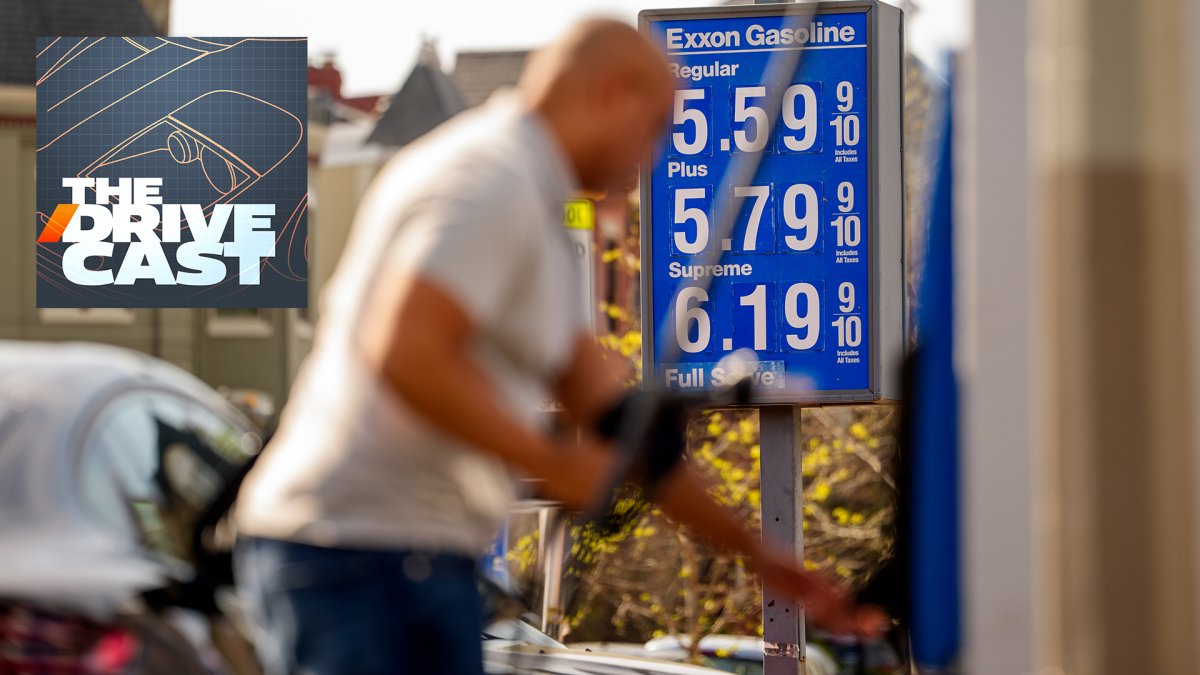
End the war stupid fucks and vote out MAGA.
They have to wait until the next election. They will forget by then
Robbing Peter to pay Paul. Just makes everything else corn based more expensive. From plastics to animal feed.
This administration is running just like trump runs his businesses into bankruptcy. From taking money from medical services to buy bombs to shuffling corn products around to cheapen fuel it’s all the shallow economics of someone who never pays anything back. All that’s left is for trump to try to borrow money from Russia.
Dilute, steal profit, repeat?
If i remember correctly, from way back in college chemistry, i learned E85 is already partially oxidized. So you are getting less energy out of the fuel. It’s a step backward, and definitely isn’t going to make anything better.
I don’t know the specific reasons, but yes, ethanol is less energy dense. The communities talking about this factually see that the loss in MPGs is pretty close to the average price difference, making it a net zero benefit.
“Whiskey! Thins out the mix, gives us an extra 50 rpm!”
Even diesel owners are probably offset by DEF shenanigans lol.
Oh well, DBF!
That’s heavy, doc
If you drive an old car that’s not designed for ethanol it’s gonna fuck up all the seals in the motor.
And you still make less power per gallon, and so don’t really save anything. The only think it improves is pre-detonation, which only matters in super high compression or turbo cars (for whom gas money isn’t the problem anyway).
Even if you drive a new car everything ive heard from actual mechanics is that it causes much more buildup and bullshit in the engine and you end up spending far more in maintenance due to using E85 then you save paying less per gallon for the fuel.
Personally in my step father’s flex fuel truck the MPG dropped by like 20% on E85 thus evaporating even more of these “savings”.
Ethanol is a trash substitute. We should be going full electric and putting all our money into that, but of course that dont prop up the corn and soybean farmers to keep them voting Republican.
For the record: ethanol burns with no carbon residue. All you want get is CO2 and water. Some countries run on E100 ethanol. Ethanol is used in drag and indycar racing, look it up.
Ethanol burns with 1/3 less energy vs gas, but much higher octane rating.
So while you will get 25% less fuel economy with E85, it costs less than half as much. But pickup drivers never math good.
It varies by area. My E85 is well above half e15. Like within a dollar so at recent best, 33% less.
This is the argument they made over 20y ago. It’s proven to be completely stupid. We already know that a fraction of the land used for corn could instead be used for solar, and it would power the entire country. Using today’s solar technology.
I’m not trying to debunk you, I just like recreational math and blue text
We’ve planted approximately 95 million acres worth of corn this year. That’s about 384,000 square km, for normal people. In 2025, the United States generated 4.43 thousand terawatthours (TWh) of electricity.
Per Wikipedia, the world’s largest photovoltaic power station is China’s Talatan Solar Park, which generates 18,000 GWh annually. It occupies an area of about 420 square km.
4,430 TWh/18,000 GWh gives us 246.1 Talatan Solar Parks to power the country photovoltaically, occupying a combined area of 103,000 square km, or around a quarter of the total corn area. That’s not even very efficient in terms of annual electrical generation per unit land area, and it’s a mere fraction of the land we waste on corn
Also, corn has very low ROI for farmers even with “free equivalent land”. Corn futures prices have not risen anywhere close to 100% fertilizer cost increases this month. Solar has much higher profit/ROI potential than ethanol corn for the land owners, with far less work.
Corn is used for many industrial raw materials, not just ethanol.
The only people calling ethanol “stupid” are internet bots driven by oil companies.
from what I understand there are only a few ways to make ethanol that is decently net positive. This was why it was huge in brazil because it works well with sugarcane but that is because the fiber is burnt to provide the energy for the distinllation and such. using corn or sugarbeets is anemic and you use the waste product as animal feed to up its anemic returns. I remember swtich grass being a thing but looking into it it seems like they have not really solved the problems of breakdown.
I remember swtich grass being a thing but looking into it it seems like they have not really solved the problems of breakdown.
There’s two ways main bases to make ethanol at scale:
- sugar
- cellulose
The sugar path is what we’re doing everywhere with corn and elsewhere with sugar cane/beet waste. The switch grass is a cellulose path, but switch grass isn’t the only feedstock that can be used. Its talked about the most because switch grass is really easy to grow.
Industrial cellulose ethanol is still only a tiny industry with only 3 commercial scale plants in operation today in the world (2 in Brazil, 1 in China). It has promise to be more, but its been small for decades.
The biggest push for cellulose approach is for making Sustainable Aviation Fuel (SAF).
If we converted all of the existing cornfields currently making ethenol to solar farms, …
edit; fixed link (Technology Connections rant about renewable energy)
Fun point: many farmers are switching from corn and wheat this year to growing soybeans, because soybeans need less fertilizer. Now you can get biofuel from soybeans, but you need to crush and process them first, and it’s more expensive and time consuming than corn-based ethanol.
Now you can get biofuel from soybeans, but you need to crush and process them first, and it’s more expensive and time consuming than corn-based ethanol.
For clarity, if you’re growing soybeans for biofuel most efficiently, you’d use it as biodiesel. You get much more energy out of it that way.
Yes, you could instead take those soybeans crush, process, and ferment them into ethanol, but you get far less energy out only yielding about 25% more energy than it takes to grow the soybeans to begin with, far lower than using soybeans as diesel fuel.
if you crush out the oil, the biodiesel, you’re still left with a significant mass of protein and carbs, the carbs are what you would want for making ethanol.
The protein? Uh, not really useful for fuel. like maybe there is some specialized microorganism that could metabolize that to make ethanol or something? Probably it would just get tossed after the starches were fermented out of the solids. Normally it’d just get fed to animals, but the reason we’re even talking about alternative uses for soy is because the foreign animal feed market has collapsed because of an idiot old mans atavistic urges.
I was just wondering, wasn’t the US exporting the soybeans to China until China said to shove it recently after another one of the tariff tantrums (and switched to buying from Argentina iirc).
So… we can get transportation power from soybeans, which is worse than from corn, which is worse than from hydrogen, which is worse than from batteries. All I getting that right?
Yah, see, thing is, multigenerational wealth cosplaying as farmers need to grow something that at least breaks even on their financalized property assets, otherwise those assets wouldn’t be “farm land” and would get taxed differently.
Props for linking the full version instead of the abridged one.
So instead of using the crop fields to feed people, we’re gonna grow corn for fuel for cars instead.
Cars are literally more important than feeding people.
Iirc something like a third of food produced in the US ends up in garbage, so it doesn’t seem like yall have shortages there.
Dumb take, less than 1.5% of corn grown in USA is edible.
So even less, then.
Already doing that
Much of our corn fields already go to fueling vehicles even the corn that isn’t is more than likely feed corn for livestock. It’s not great for human consumption.
I thought I’d heard that corn doesnt even have any nutritional value.
It doesn’t. Likely why Americans are so fat. Everything in US food has corn or is fed corn. 98.5% of corn is used for cheap sugars, oils, and precursor for plastics.
It kinda has to in order to make ethanol.
You only need sugar to make ethanol, which is not nutritional.
Sugar is absolutely a source of nutrition. It’s not a good source, but it’s definitely one.
You can make ethanol dirt cheap its the carb source for fermentation.
I wound up Googling it and you’re correct that it is a source of calories, carbs, protein, and fat surprisingly.
Surprisingly? Corn is how you fatten up farm animals and humans, that’s been known hundreds of years. That’s what “corn fed” refers to.
And you get fatter eating animals fed corn.
Food that has been eaten for thousands of years having things that our bodies need in it is surprising?
I think it has some value but not much, not unless it’s been through nixtamalization which frees up vitamins and other nutrients. Masa harina is cornflour that’s been through that process. Masa Harina is also used in making tamales.
It will bring down prices. Got a few weeks. Until the balance of costs of ethanol kicks in. Just in time to make money off of the grift.
This would be a good time to let people work from home more.
That would be too helpful and threaten the purpose of middle managers.
Thats a part of it, but I think the biggest thing is they know that once work from home gets normalized, commercial real estate is going to tank and make what happened in 08 with subprime mortgages look quaint by comparison.
The big time real estate developers dont care about residential property, and more and more Space For Lease signs are showing up everywhere. If work from home becomes the norm they stand to lose a fortune and they will do anything in their power to prevent that.
I also believe there is some tax incentives for businesses getting butts in the seats at their brick and mortar workplaces too. Like on-site facility deductions and such.
Oh im sure…empty office buildings slowly decomposing isnt a good look for an areas local economy.
If we weren’t run by monied interests wed be offering tax incentives the other way to get more people off the road but that doesnt keep us all dependent on fossil fuels so that’s right out the window.
Also cities provide tax incentives to corps to get bodies in downtown areas supporting the restaurants and shops
I’m sure there’s a few C level guys who wish they could have owned plantations but will settle for cubicles.
Ethanol isn’t as energy dense so it may or may not cost less but it will definitely get less mileage.
Probably not. It will be a subsidy to corn farmers, artificially increase corn prices. Farmers have generally not been having a great time of it under Trump administration policies, so they’ll probably be happy about that. Corn consumers, maybe not so much.
https://www.nbcnews.com/business/economy/trump-iran-war-farm-crisis-rcna266283
Before the war, roughly a third of the world’s fertilizer ingredients and a fifth of its oil supplies passed every day through the Strait of Hormuz, a narrow waterway off Iran’s southern coast. But since the U.S. and Israel attacked Iran on Feb. 28, the strait has been effectively closed by Tehran, leaving scores of tankers stranded.
The strait’s closure has driven up global prices for fertilizer and for the diesel fuel that powers most of America’s heavy agricultural equipment.
The double whammy is hitting farmers just as they head into the spring planting season.
“This is that perfect storm where everything comes together and hammers the farmer,” said Mueller, who also serves as the president of the Iowa Corn Growers Association.
Mueller said his fertilizer supplier was selling a nitrogen fertilizer he needs for $795 per ton on Feb. 22, a few days before the war started. At the end of March, it was $990, Mueller said, a nearly $200 jump in just a few weeks.
Meanwhile, the price he’s paying for diesel has jumped, too. Diesel is now averaging $5.51 nationwide, up from $3.76 right before the war, according to AAA.
Mueller said he got most of the fertilizer he needs for spring before the war — but had to buy some at the higher prices. He’s holding off on purchasing the additional fertilizer he needs for summer, hoping prices will come down.
President Donald Trump’s tariffs have also added to the cost of goods that farmers import from overseas — and frustrated many of the foreign buyers of America’s agricultural products.
“Our government made our life more difficult by walking away from trade deals or instituting tariffs or just basically making our customers angry — our customers being other nations and companies in other nations,” said Mueller.
Shitty-shitty Bang-bang
Not all cars can run e85 let alone e15.
I mean to not handle e15 it has to be from the last millenium. but e85 yeah.