

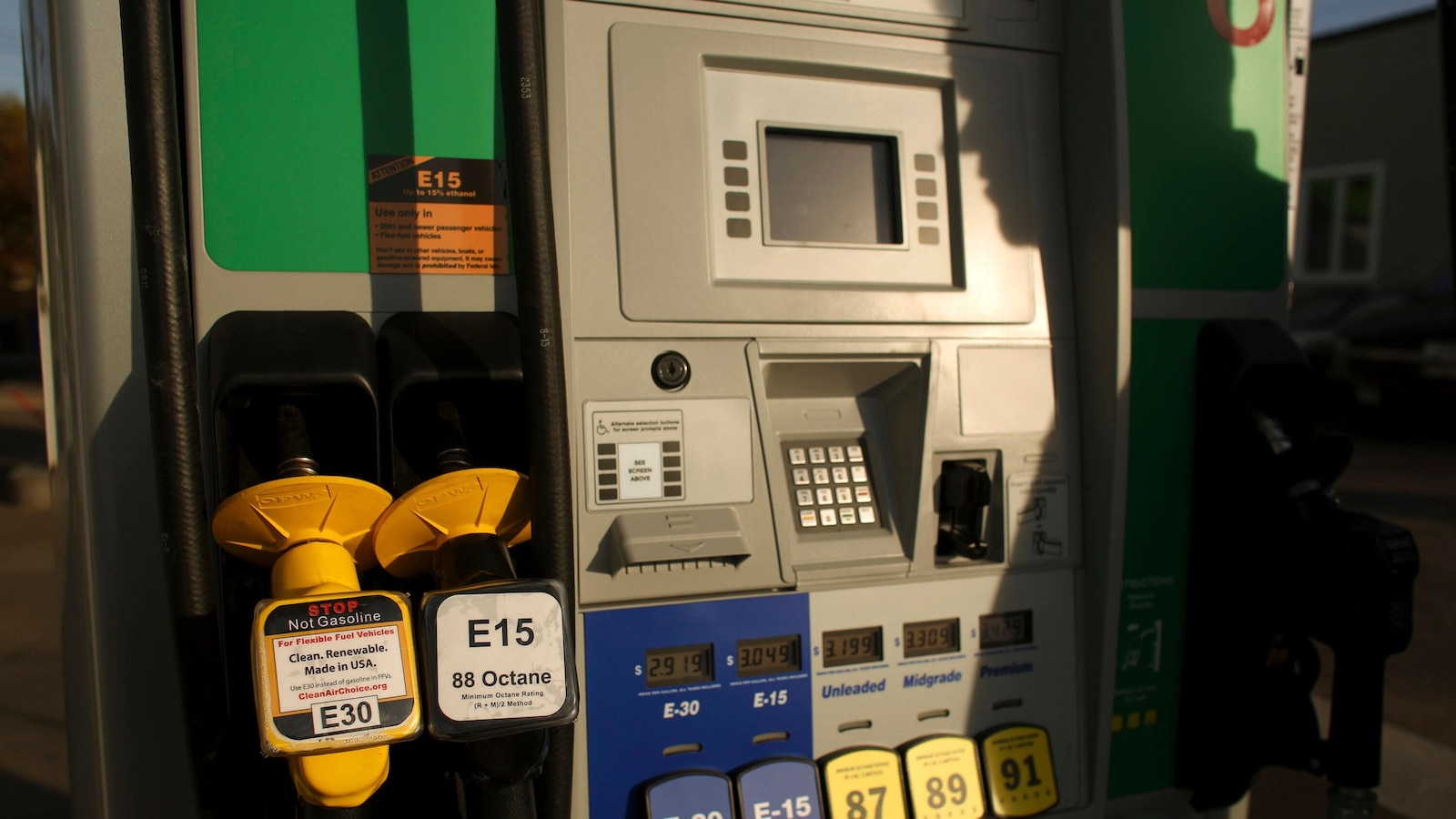
The U.S. Environmental Protection Agency said Wednesday that it would temporarily allow widespread sales of a higher ethanol gas blend in a move that they hope will tamp down consumer prices that have soared since the Iran war began.
The sale of E15 is typically discontinued in the summer because it can contribute to harmful air pollution.
Not all are convinced the move will substantially lower gas prices. E15 isn’t available in all states and some places don’t have the necessary infrastructure or enough of a supply of ethanol to ramp up use, said Kenneth Gillingham, a professor at the Yale School of the Environment who studies the impacts of transportation regulations on prices, emissions and consumer welfare.
I don’t think everyone switching to electric cars is the best possible solution. Think of all the waste, there are plenty of older cars that are in running condition.
Although, maybe if there was a market for affordable electric conversions then that would be best.
Emissions from building a EV is from memory less than the emissions from continuing to run an ICE car after only a few years. And rapid adoption would encourage more renewables into the grid and in homes further increasing the EV advantage.
Would that extend as far as mining, battery construction, and (probably) shipping components around the globe?
Usually these sort of studies include embodied emissions including all of the inputs that go into building the car. This article here: https://www.reuters.com/business/autos-transportation/when-do-electric-vehicles-become-cleaner-than-gasoline-cars-2021-06-29/
focuses on new-to-new comparisons, but if you subtract the embodied emissions of around 8M tonnes of CO2 for the model 3, it looks like the break even point using the US electricity supply in 2021 is around 4.5 years. And that is probably a bit conservative given that:
Of course, it also depends on how much the car is used. If you use a used ICE car extremely infrequently the crossover point will be later.
Here’s a research article I have gotten around to reading yet but you may find interesting: https://www.sciencedirect.com/science/article/abs/pii/S095965262300269X
You might have to go to annas-archive and the like to get the content however.
Nearly 14k miles is a lot for people in some locations. This is more or less what I was talking about. OP was throwing out random (trust me bro) figures, but the numbers I’ve seen are more nuanced, like these.
My point was basically that I thought their assertions were rather naive. I like the idea of electric, but not necessarily what I’ve seen out of the tech rn.
I’d also be curious how things worked over the life of the vehicle, and not some arbitrary tipping point early on in the x axis.
Battery replacement is usually going to be far more significant than 14k miles, but will have to happen. A standard carolla or camery can run for fucking ever with modest investment in care. All the care in the world won’t protect you against batteries going belly-up.
Lithium batteries are far, far, far more reliable than a Toyota. It’s not even a comparison.
How so? I’ve had Toyotas last me literal decades and hundreds of thousands of miles with minimal maintenance.
I have not encountered a battery in my life with that sort of stamina.
EV batteries are rated for 100K miles without any maintenance, and can often exceed that many times over.
https://www.npr.org/2026/03/02/nx-s1-5706658/electric-vehicle-battery-lifespan
You cannot run a Toyota more than 15k miles without maintenance. Usually it’s just an oil change, but there are so many moving parts that need regular maintenance, and many engines will just up and die before a battery will.
EV cars also have rhe benefit of needing less brake maintenance, though that is offset by the tire wear and weight of long range EV cars.
Something like a Citroën Ami will probably wear out the interior before any mechanical component dies. Maybe some rare maintenance like a tire change.
Yeah, after all gas needs to be extracted distilled and shipped around the globe every time you fill up. Only to be burned at 20-30% efficency.
It’s efficiently burned, but you only get to use 20-30% of the energy you buy, the rest is wasted as heat.
That isn’t the same. I didn’t ask about electricity (that would fuel the vehicle). I was pointing out that, among other things, batteries require mining in very specific locations, shipping raw components to where batteries will be built, building them, and shipping them to their destination.
Apples to apples (insofar that it is possible), my dude.
Yeah I know it will barely make a dent. But I think making them just a little tiny bit more attractive is a good thing. Speed up the adoption, cultural acceptance and general acceleration of technology ever so slightly.
What would make it seem more attractive to me, is more safety testing, less consumerism, less ads, less surveillance, less nazis, and less money going to fascists.
Oh I’m explicitly not talking about tesla here. But yes, those are all good points that I agree with.
Giving money to fascists includes Toyota/Lexus/Subaru, Ford/Aston Marton/Lincoln/Land Rover/Mazda, GM/Cadillac/Chevrolet/GMC/, Volkswagen/Audi/Porsche/Lamborghini and the other companies that are either donating to fascists directly or are helping them materially in other ways.
Lower price, too.
Electric cars aren’t unattractive because they’re electric cars. They’re unattractive because they cost 1/4 the cost of my house and come preenshitified with subscriptions. If I could afford an electric car I would get one. Let me know when you see one selling for under $5k.
You can buy a new gas car for $5K?
When did I say new? I still have no idea how anyone who isn’t a millionare or more could buy a new car. I’m decently above average income and even the cheapest new cars still cost an impossible amount of money. Yeah loans are a thing but that also confuses me because why would any bank give anyone a +$20,000 loan for a fairly rapidly depreciating asset which could be totaled the next day by a random deer or bad driver. Yeah, insurance is a thing but the cost of insurance on new cars is also inconceivably expensive. Even if you ignore the cost of vehicle itself, how do people even manage to pay the insurance premiums and registration costs? Some people must be buying new cars of course but I genuinely have no idea how or why.
Polestar exists. Buy used. You can get a great EV for less than 30k regularly and less than 20k depending on your needs and deal shopping.
Those prices are an absolute steal in today’s car market.
Around me,you can buy a Nissan leaf for $4000 without a lot of miles…but this won’t last long when people get a clue about EV misinformation.
$20k is still more than I can ever imagine spending on a vehicle. The most expensive vehicle I ever bought was $3k and I really had to think on that one. Until there are +20 year old used electric vehicles for sale, they aren’t an option for me. Unfortunately it also looks like they are being built like every other piece of tech and designed to be tossed out every few years so I don’t know that +20 year old electric vehicles will ever really exist. Not that new gas engine cars are any different in that way either of course.
I’m referring to the market of people who can already afford one, but choose not to because of various reasons like range, charging speed, politics, charging availability, etc. I never said the only reason they’re unattractive is anything specific. But anything that helps them get in the mainstream consciousness will eventually help things like mass production, research, and market share, which will also help price and overall technology improvement speed. $5k electric cars may come in the future but nothing relating to ethanol in gas will directly cause those to appear and before that happens EVs in general need to become more accepted and more adopted.