

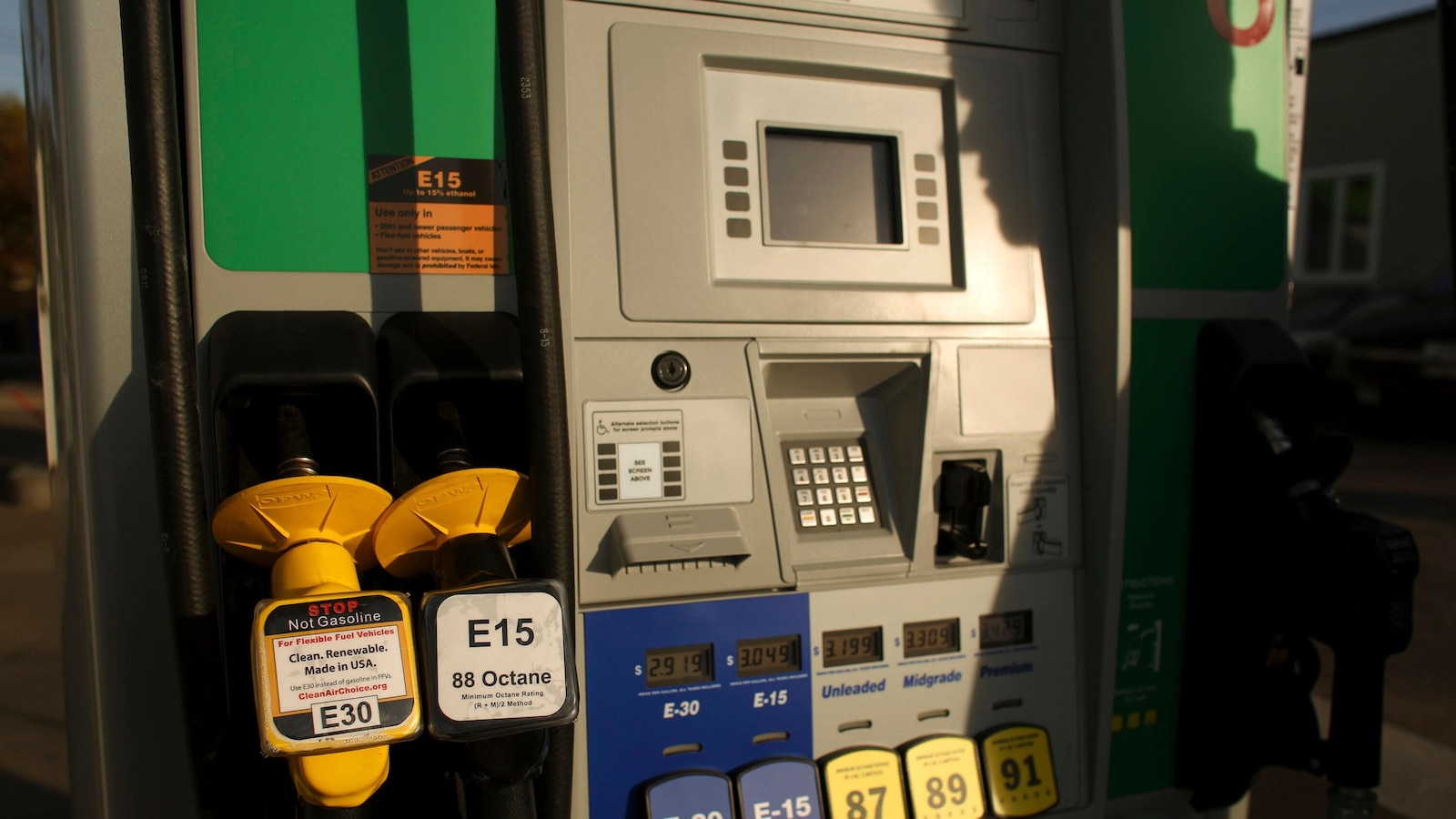
The U.S. Environmental Protection Agency said Wednesday that it would temporarily allow widespread sales of a higher ethanol gas blend in a move that they hope will tamp down consumer prices that have soared since the Iran war began.
The sale of E15 is typically discontinued in the summer because it can contribute to harmful air pollution.
Not all are convinced the move will substantially lower gas prices. E15 isn’t available in all states and some places don’t have the necessary infrastructure or enough of a supply of ethanol to ramp up use, said Kenneth Gillingham, a professor at the Yale School of the Environment who studies the impacts of transportation regulations on prices, emissions and consumer welfare.
Usually these sort of studies include embodied emissions including all of the inputs that go into building the car. This article here: https://www.reuters.com/business/autos-transportation/when-do-electric-vehicles-become-cleaner-than-gasoline-cars-2021-06-29/
focuses on new-to-new comparisons, but if you subtract the embodied emissions of around 8M tonnes of CO2 for the model 3, it looks like the break even point using the US electricity supply in 2021 is around 4.5 years. And that is probably a bit conservative given that:
Of course, it also depends on how much the car is used. If you use a used ICE car extremely infrequently the crossover point will be later.
Here’s a research article I have gotten around to reading yet but you may find interesting: https://www.sciencedirect.com/science/article/abs/pii/S095965262300269X
You might have to go to annas-archive and the like to get the content however.
Nearly 14k miles is a lot for people in some locations. This is more or less what I was talking about. OP was throwing out random (trust me bro) figures, but the numbers I’ve seen are more nuanced, like these.
My point was basically that I thought their assertions were rather naive. I like the idea of electric, but not necessarily what I’ve seen out of the tech rn.
I’d also be curious how things worked over the life of the vehicle, and not some arbitrary tipping point early on in the x axis.
Battery replacement is usually going to be far more significant than 14k miles, but will have to happen. A standard carolla or camery can run for fucking ever with modest investment in care. All the care in the world won’t protect you against batteries going belly-up.
Lithium batteries are far, far, far more reliable than a Toyota. It’s not even a comparison.
How so? I’ve had Toyotas last me literal decades and hundreds of thousands of miles with minimal maintenance.
I have not encountered a battery in my life with that sort of stamina.
EV batteries are rated for 100K miles without any maintenance, and can often exceed that many times over.
https://www.npr.org/2026/03/02/nx-s1-5706658/electric-vehicle-battery-lifespan
You cannot run a Toyota more than 15k miles without maintenance. Usually it’s just an oil change, but there are so many moving parts that need regular maintenance, and many engines will just up and die before a battery will.
EV cars also have rhe benefit of needing less brake maintenance, though that is offset by the tire wear and weight of long range EV cars.
Something like a Citroën Ami will probably wear out the interior before any mechanical component dies. Maybe some rare maintenance like a tire change.