

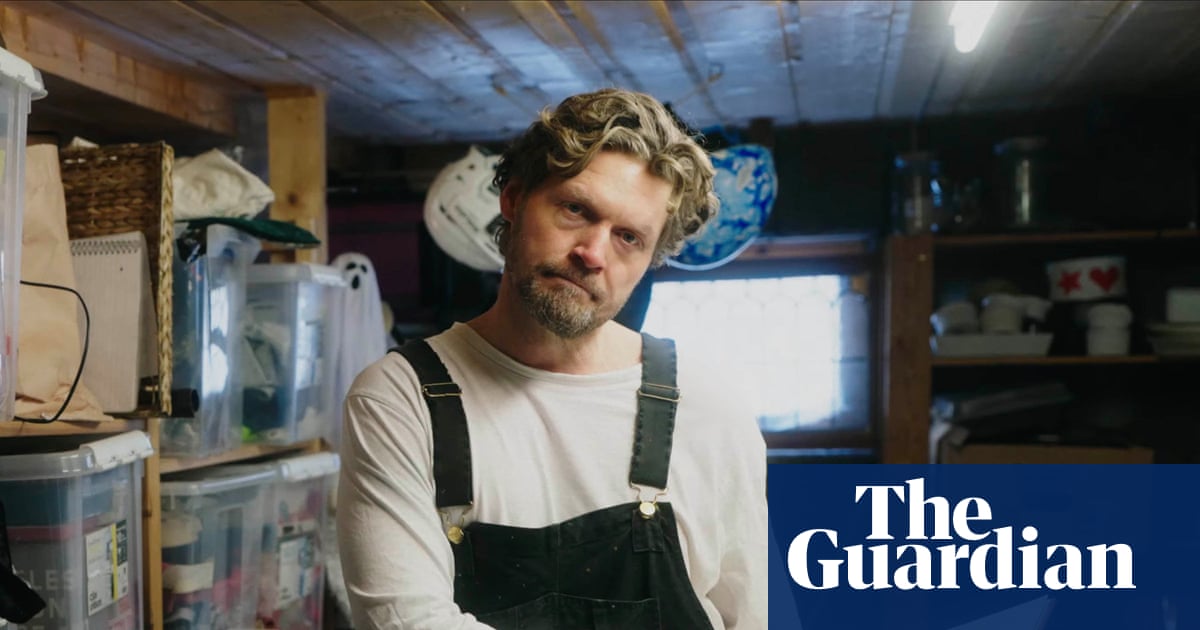
The video’s opening shot shows a man hiding under a bed snipping in a hole in someone’s sock. Seconds later, the same man uses a saw to shorten a table leg so that it wobbles during breakfast. “My job is to make things shitty,” the man explains. “The official title is enshittificator. What I do is I take things that are perfectly fine and I make them worse.”
The video, released recently by the Norwegian Consumer Council, is an absurdist take on a serious issue; it is part of a wider, global campaign aimed at fighting back against the “enshittification”, or gradual deterioration, of digital products and services.
“We wanted to show that you wouldn’t accept this in the analogue world,” said Finn Lützow-Holm Myrstad, the council’s director of digital policy. “But this is happening every day in our digital products and services, and we really think it doesn’t need to be that way.”
Coined by author Cory Doctorow, the term enshittification refers to the deliberate degradation of a service or product, particularly in the digital sphere. Examples abound, from social media feeds that have gradually become littered with adverts and scams to software updates that leave phones lagging and chatbots that supplant customer service agents.
You have me at a depressive phase, exhausted from my work week, so I fully agree with you. However, I know the more optimistic version of me would say:
But we overcame feudalism, we abolished slavery. These were also systems where the (incentives * power to change things) were strong and aligned to preserve the status quo. Still, our ancestors made the choices that made the world better for us, rather than for them. There must be a prosocial kernel in us, a drive we could appeal to if we could just broadcast a coordination signal loud and reliable enough.
I live in a remote town with a sizable population of city-raised, university-educated workers. I’m surrounded by people fully committed to both the liberal and conservative worldviews. Both groups have shitty individuals, exploiting the beliefs and biases of their faction for their personal advantage (the liberal ones tend to be smarter and more insidious, but all the worse for it; the conservatives dumber and more direct). But the majority of both groups are well-intentioned, caring people who would and do sacrifice for others. They’re just all convinced that fighting the mostly good people in the other faction is what’s right, rather than working together to change the game entirely. The challenge is to convince, to coordinate, not to defeat.