

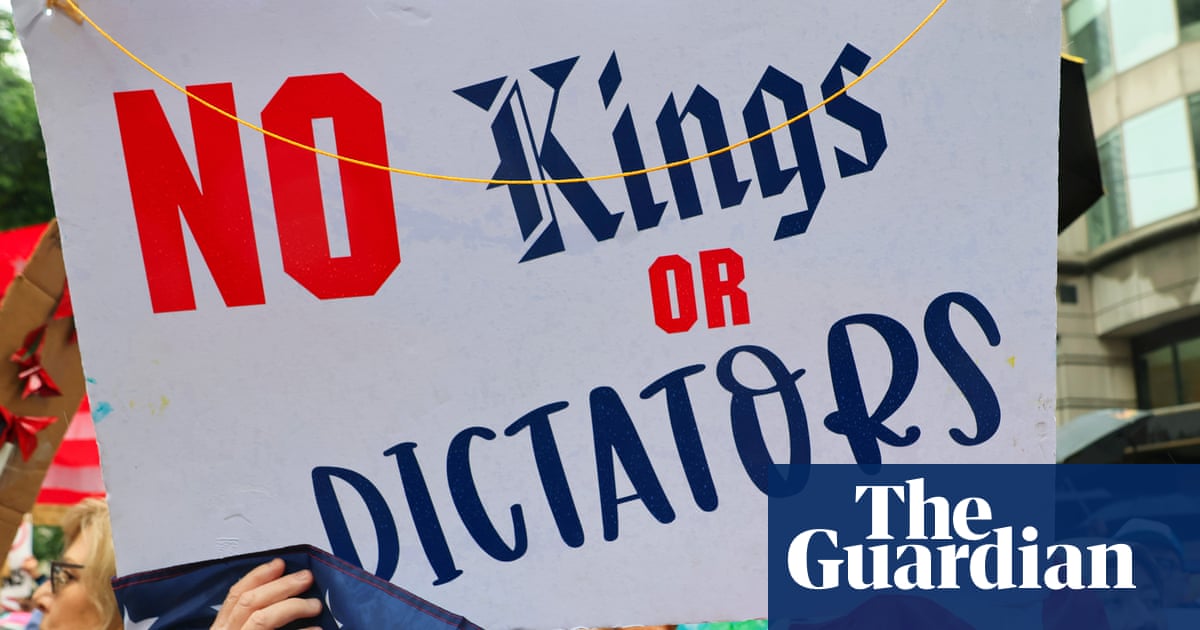
More than 3,100 anti-authoritarian protests are scheduled across the US and at least 15 other countries on Saturday. All these events will take place under a single banner: No Kings.
Formally launched in June to fight back against Trump administration policies, the No Kings movement has grown with astonishing speed – its second and most recent mass protest in October drew an estimated 7 million participants. Organizers expect Saturday’s events to be the biggest protest in American history.
But the movement is also leaderless, broad in cause and hasn’t advanced any policy demands. Some social movements experts recognize No Kings’ momentum but question if it needs clearer goals.
“There’s not any one way to get people into a movement. You want to have as many doors open as possible because you have to reach people wherever they are,” said Hahrie Han, a political scientist at Johns Hopkins University and the co-author of Prisms of the People: Power & Organizing in Twenty-First-Century America. “The bigger challenge is, once they’re there, how do you keep them there, and then how do you channel that engagement in collective ways?”
But organizers say they are aware of such critiques and that these choices are all by design.
“The name No Kings is, in and of itself, a demand. It is a direct repudiation of this administration, of this regime, of its unconstitutional, illegal, immoral and frankly profane actions,” said Hunter Dunn, an organizer with the 50501 movement, one of the groups behind No Kings. “It’s a declaration of intent that we are going to return power back to the people.”
They might need a brain scan device