

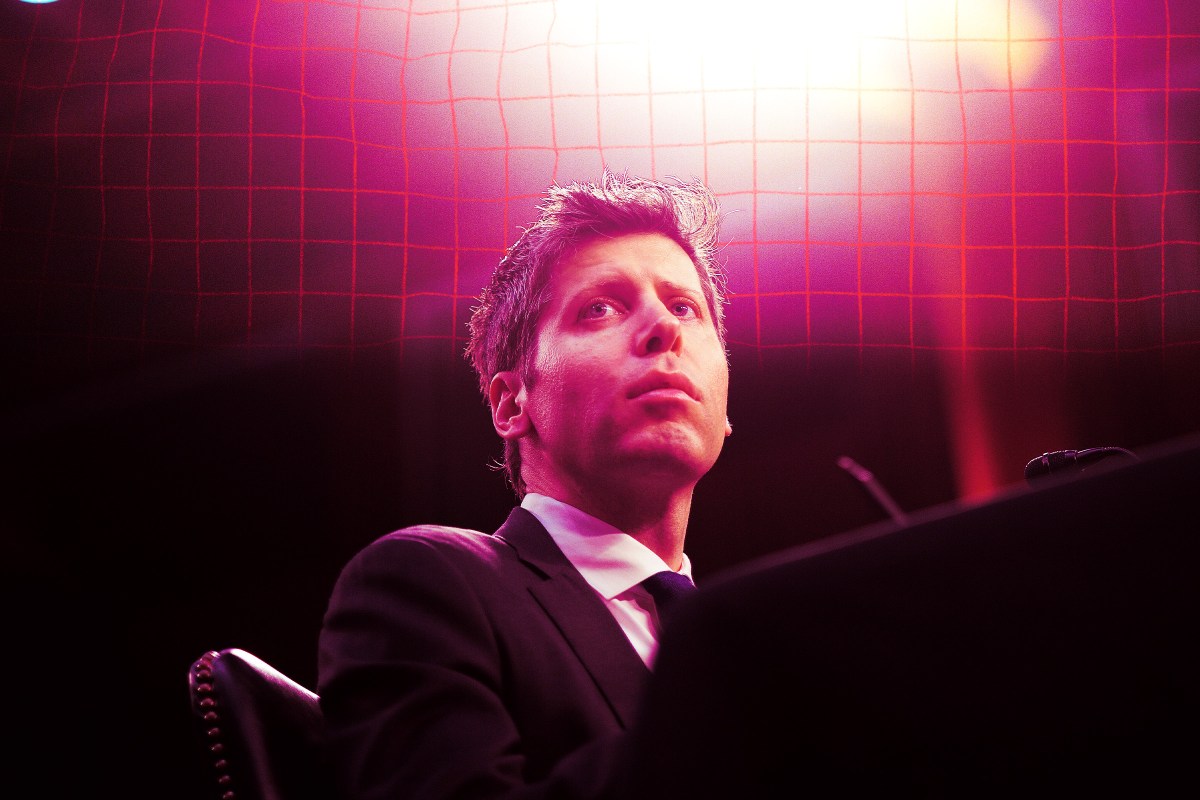
Sam Altman, OpenAI’s CEO and the public face of ChatGPT, has carved out an image for himself as one of the preeminent AI whisperers of our age, whose influence supposedly extends to the White House on the strength of his ideas alone.
Or at least that’s the image he’s managed to cultivate. A new exposé in the New Yorker paints a different portrait, and it’s substantially more vexing. Drawing on interviews with numerous OpenAI insiders who worked with Altman, the article portrays the CEO not as a technical wiz, but as a skilled manipulator— and one with a surprisingly shallow grasp of the AI systems his company is building.
According to numerous engineers interviewed for the article, Altman lacks experience in both programming and in machine learning — a shortage of expertise that becomes obvious when the CEO mixes up basic AI terms.
they are the patsies for the board of the directors usually they have the power,and act as lightning rods, its a plus if they use woman to take the flack (aka glass cliff)
Huh, did not know that term. But yes, that’s what I’ve been saying all the time. The CEO is a highly paid fall guy so when the company commits a crime, the CEO can be fired and the company can keep on doing whatever it does. Similarly, if the stock value tanks, the CEO goes bye-bye so investors can be led to believe that things will turn around now.
Of course the Trump admin is so corpo-friendly, there’s been no need to fire a CEO for corporate wrongdoing. Because at this point you can do anything and nothing would happen anyway.
21 years later, here I am learning the term.
https://en.wikipedia.org/wiki/Glass_cliff
one recent example is musk hiding behind a woman ceo, when he went full nazi.